Tuesday, February 17th, 2026
For 16 years, Trash the Runway has been inspiring young people in Boulder through a unique blend of creativity, sustainability, and hands-on learning. What began as a small community event with a handful of student designers and about 30 attendees has grown into a highly anticipated annual program that now engages dozens of middle and high school students each year and draws broad community support.
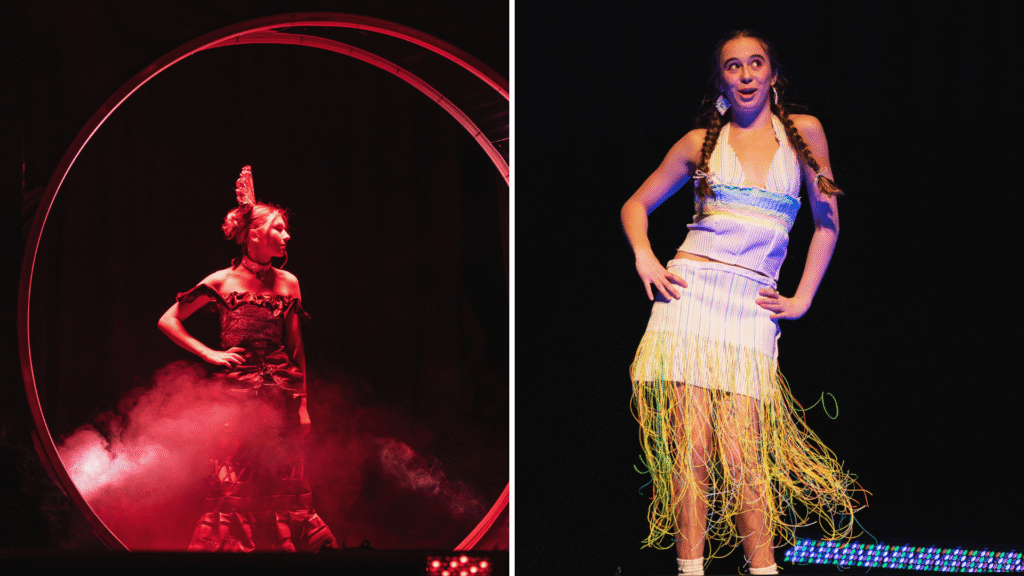
At its core, Trash the Runway uses fashion design and sustainability as a vehicle for youth development. Catherine Winsten, Board Chair, shares “Our mission is to change the lives of young people by unlocking resilience, confidence, and new ways of critical thinking.” Participants design and construct wearable garments entirely from nontraditional, nonrecyclable materials, transforming discarded items into works of art while building confidence, collaboration skills, and a strong sense of self.
Trash the Runway was originally founded by Common Threads under the name Recycled Runway. In 2018, the program officially incorporated as a nonprofit and became Trash the Runway. Today, the organization serves approximately 35–38 students annually through its core program, along with a growing junior cohort that is creating a pipeline of future designers.
Each year, students participate in a series of workshops where they design and construct garments over several weeks, culminating in a runway show that highlights not only their creations, but also their personal growth. Winsten says the transformation in students is remarkable. “We’re really using our program and our workshop to bring out that resilience and confidence in students,” she explains. “It is so clearly showcased on stage – the confidence, how they speak, and the maturity level.”
The designers source their own materials, often collecting items for months in advance. Some gather materials from home, while others reach out to businesses to gather usable waste. Strict guidelines ensure that materials are nonrecyclable and cannot be used for their original purpose, pushing participants to think creatively. Tanja Leonard, Executive Director, shared one example that captures the creativity and determination of the students: “One student set out a box at her favorite sushi restaurant to get the soy sauce packets and eventually she got enough to create a whole dress.”
Even though the program culminates in a competition-style runway show, collaboration is central to the experience. “It’s a huge part of the program with the kids helping each other,” Leonard says. “They cooperate and collaborate a lot. Even though it is a competition, they don’t treat each other that way in the workshops.”
Recent enhancements, such as a stage presence workshop led in partnership with local arts organizations the Boulder Ballet and Boulder Ensemble Theater Company, have further elevated the program. Winsten and Leonard both noted that this year’s participants demonstrated exceptional confidence and thoughtfulness when speaking on stage about their designs and experiences.
Looking ahead, the organization is exploring new ways to grow beyond Boulder. “The consistent feedback is always, ‘I wish a program like this existed when I was a kid’ ” Winsten states. “We believe the program’s STEAM-based approach offers meaningful engagement and that keeping students off screens and immersed in hands-on learning is of interest to other communities.”
Like many small nonprofits, Trash the Runway operates leanly. Funding and capacity remain ongoing considerations as the organization explores how to grow responsibly. “Financing is always a struggle,” Winsten says. “How do we continue to run the program in a lean way? How do we grow the program, being mindful of how we’re going to fund it?”
Leonard echoed that reality, noting the program is sustained largely by passion and dedication. “I don’t think it’s sustainable to keep running it on a shoestring like we are,” she says. “We do it because we love the program but figuring out the whole package of what it would look like to grow is a challenge.”
Currently, the organization’s greatest needs center around strategic support for growth, sponsorships, and donations that can help strengthen infrastructure and ensure long-term sustainability. Community members can make a difference by donating, attending events, spreading the word, encouraging students from diverse backgrounds to apply, and helping the organization think through its next phase of growth.
Trash the Runway just completed their 2026 runway show on February 7 and will be inviting the next round of students into the program later this year. The organization continues to prove that creativity can transform not only discarded materials, but also the lives of young people. With each new cohort, the program empowers students to take risks, express themselves, and step confidently into the spotlight both on the runway and beyond.
To get involved or to learn more visit: trashtherunway.com